New Dimensions of War and Threats to Officials
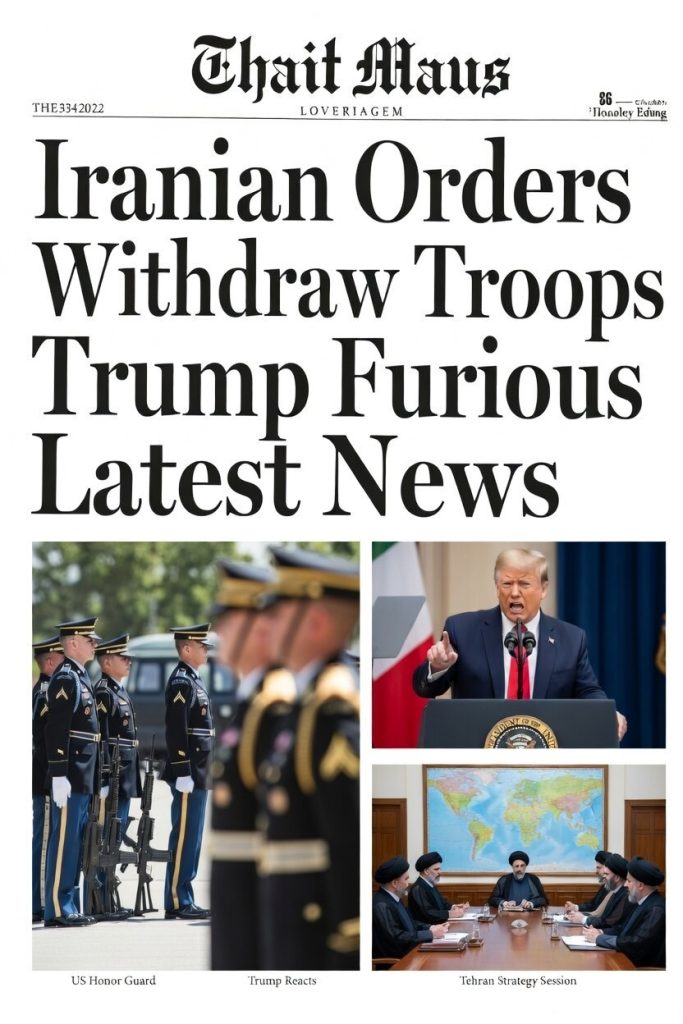
A new dimension of the war has emerged with a direct threat from Iran to the United States, stating, “Now we will enter your homes and kill you.” The intensity of this war is continuously increasing, and oil prices have started rising again, causing significant distress in global oil markets.
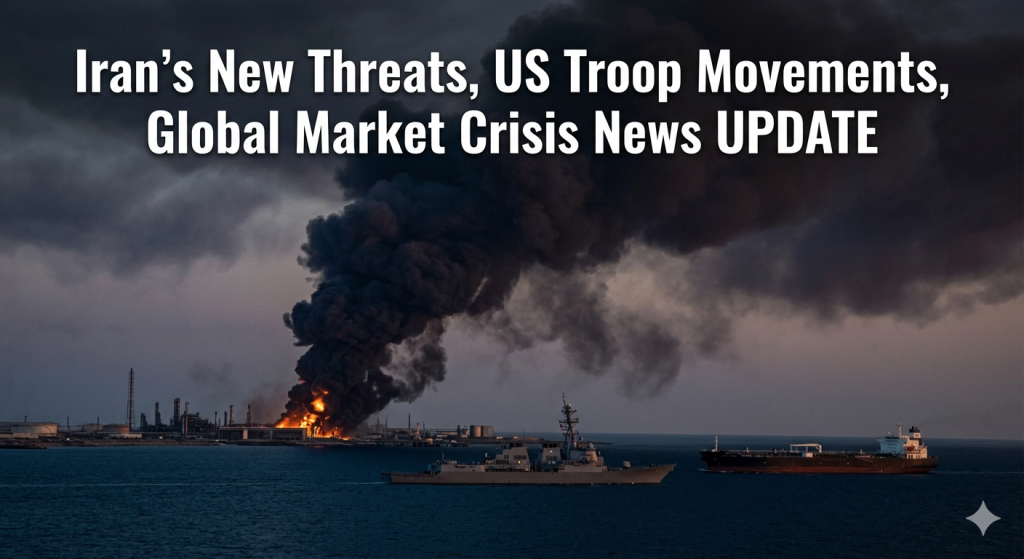
Image Genrated By gemini
The spokesperson for the Iranian military (Revolutionary Guard) has formally announced that they will now target the private residences of American and Israeli officials. These attacks will no longer be limited to offices or military installations but will extend to their homes. This statement followed intense bombing in Tehran.
Developments in Lebanon and Israel
A controversy has arisen involving the captain of the Israeli football team, Manashe Zalka. He was seen in Southern Lebanon participating in military operations alongside Israeli soldiers, including firing and taking part in all operations. Football fans worldwide are calling for a ban on him, arguing that sports should be separate from bloodshed and occupation.
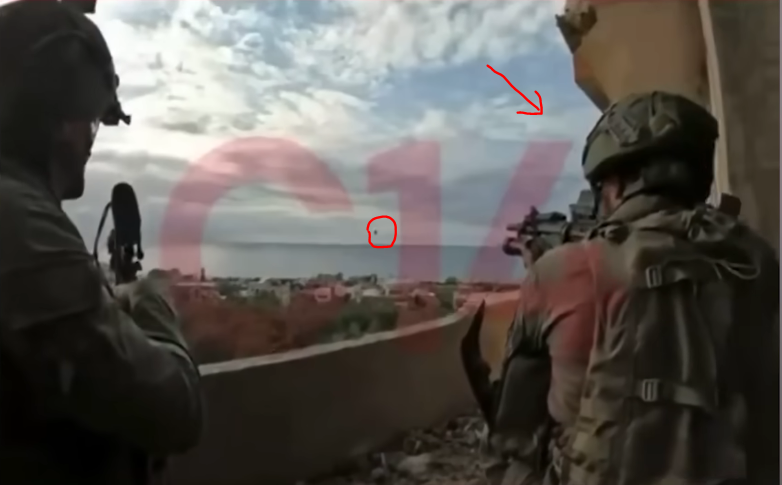
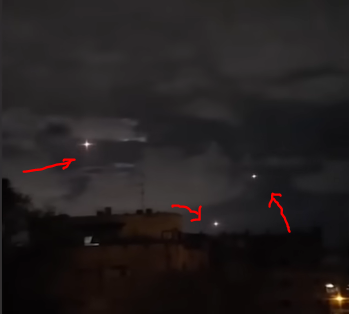
Israeli Prime Minister Benjamin Netanyahu has ordered the military to expand their incursions into South Lebanon, with troops moving toward the buffer zone and the Litani River. During this advance, a US soldier was killed in an explosion at a United Nations post. In Haifa, the Israeli air defense system has been intercepting incoming missiles. Despite claims by Donald Trump that the Iranian defense system has been destroyed, the continuous firing of interceptors suggests the ground reality is different.
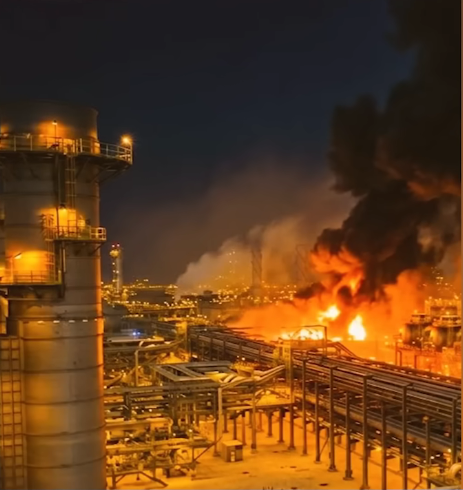
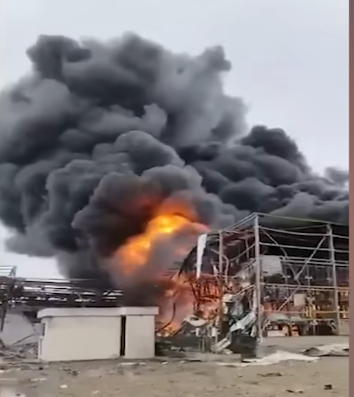
An Israeli chemical plant in southern Israel was also targeted by an Iranian missile attack. While damage is being assessed, no injuries were reported. This attack mirrors those carried out inside Iran. In an area near Kiryat Shmona (Newyort Hawab), Iranian missile attacks on a factory caused severe fires. Furthermore, an Islamic Health Authority Center in Southern Lebanon was attacked, resulting in the deaths of two paramedics.
Attacks on the UAE and Infrastructure
The United Arab Emirates has faced the most bombardment from Iran after Israel, with approximately 40% to 50% of Iran’s attacks targeting cities like Dubai, Sharjah, and Abu Dhabi. Recent footage from Sharjah shows smoke clouds following such attacks.
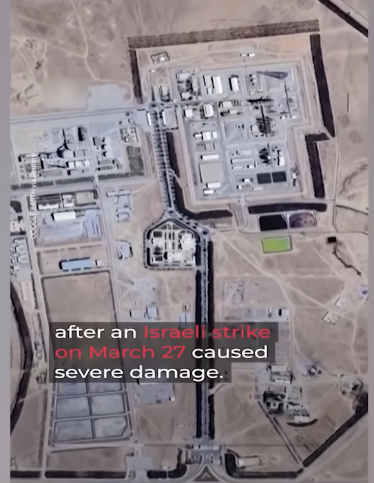
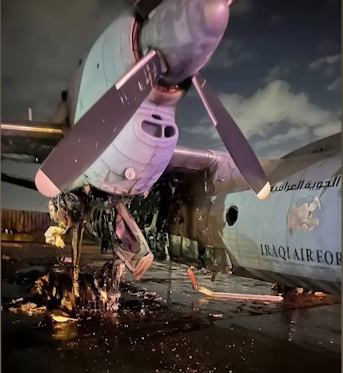
The United Nations’ nuclear watchdog has confirmed that Iran’s Khandab heavy water production plant is no longer operational due to bombing. However, there is no fear of radiation leakage as nuclear materials had already been removed. In Iraq, an An-32B military transport aircraft of the Iraqi Air Force was destroyed by a drone and rocket attack attributed to Iranian-backed militants. Additionally, various groups in Mosul have carried out attacks on US installations.
Humanitarian Crisis and West Bank Tensions
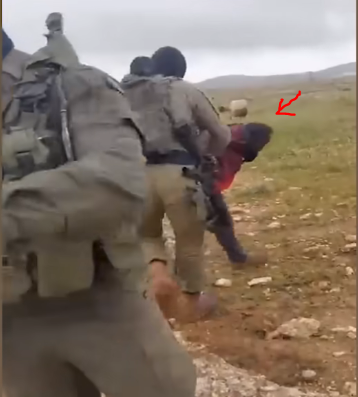
In the Masafer Yatta area of the West Bank, Israeli forces have been reported torturing a Palestinian farmer to vacate land, often involving the seizure of livestock. In Gaza, footage of a very small child forced to carry heavy water containers illustrates the severe humanitarian crisis and the labor children must perform due to the ongoing violence.
Saudi Arabia and “Soft Kill” Weaponry
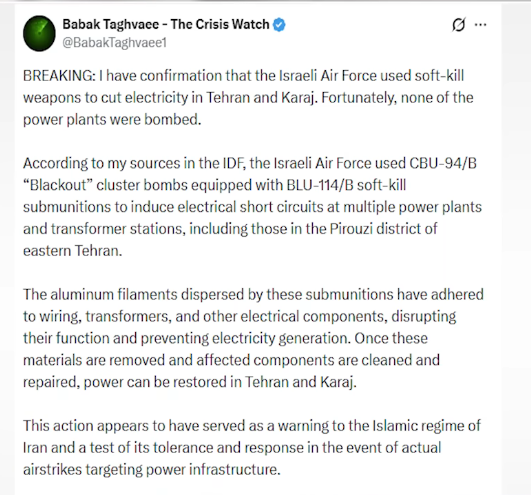
Saudi Arabian forces tracked and intercepted five ballistic missiles fired toward the Kingdom’s eastern province. Meanwhile, defense analysts report that the Israeli Air Force used “soft kill” weapons, specifically CBU-94/B blackout cluster bombs, to cut electricity in Tehran and Karaj. These bombs create a magnetic field to induce short circuits at power plants and transformer stations rather than destroying buildings. This resulted in entire cities being plunged into darkness.
Economic Impact and Market Crashes
The conflict has caused severe economic ripples. The Pakistan Stock Market experienced a massive crash, dropping approximately 6,000 points (about 20% from its yearly high) to around 144,000 points. Crude oil prices reached $116 per barrel, and Wall Street analysts are preparing for the possibility of oil reaching $200 per barrel. Such an increase would drastically impact petrol and diesel prices in countries like Pakistan.
Stock markets in Japan fell 3.5%, South Korea fell 3% to 5%, and declines were also seen in Hong Kong, Australia, Malaysia, and Indonesia. South Korea’s Finance Minister warned that if oil exceeds $120, restrictions on private vehicles may be imposed. Rumors of a lockdown in Pakistan circulated via fake notifications on WhatsApp, but no final decision has been made despite some suggestions given to the Prime Minister.
Diplomacy and US Military Strategy
Pakistan’s Foreign Minister Ishaq Dar traveled to Beijing to discuss peace initiatives between the US and Iran and to take China on board. He also met with the Foreign Ministers of Saudi Arabia, Egypt, and Turkey in Islamabad, where they declared diplomacy as the only solution.
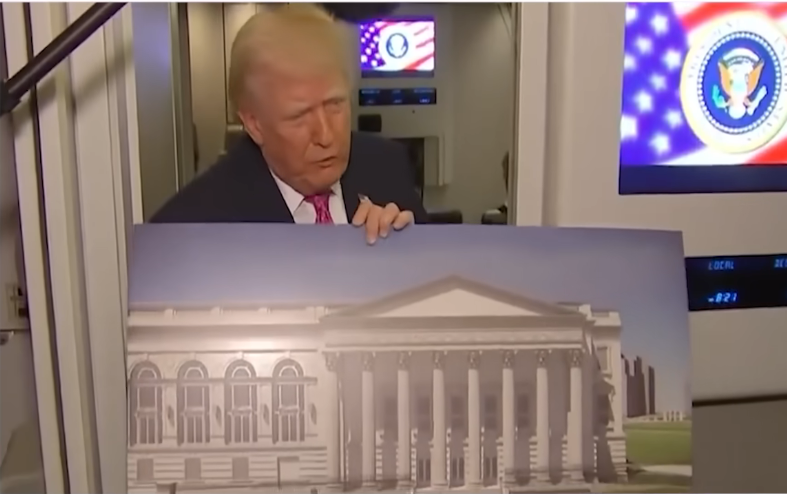
Donald Trump stated that the US is talking to Iran both directly and indirectly. He claimed that “regime change” has effectively occurred because the previous leadership has been “destroyed” and the US is now dealing with a “different group”. Trump also mentioned the possibility of seizing Iran’s Kharg Island oil hub, noting that while 13,000 targets have been bombed, 3,000 remain. Reports suggest the US is considering a military operation to remove 1,000 pounds of uranium from Iran to prevent nuclear weapon development.
Troop Levels and Ground Operation Plans
There are now over 50,000 US troops in the Middle East, which is 10,000 more than usual. This includes 2,500 Marines and 2,500 naval personnel. However, military experts warn that 50,000 troops are insufficient for a major ground operation in a country of 93 million people like Iran, which would likely require at least one million soldiers.
The Pentagon is reportedly preparing for weeks of ground operations, including raids on Kharg Island and coastal areas near the Strait of Hormuz to destroy weapons targeting ships. While plans are ready, the potential for high American casualties and the resulting political impact remains a major hurdle for Trump. Meanwhile, public popularity for Trump is reportedly decreasing, with millions of Americans protesting against the war.
New Technology and Cyber Blackouts
Iran has experienced a near-total internet blackout, with only about 1% of the population having access for the past month. The US has decided to use F-22 Raptor fighter jets, known for their stealth and advanced combat capabilities, in the region.
A new US ballistic missile was reportedly used to strike a sports hall and a school in southern Iran. This precision weapon is designed to explode in the air and scatter fragments. A similar strike in the city of Minab resulted in 175 casualties. This technology represents a previously untested weapon in this conflict.
Iran’s Retaliation and University Threats
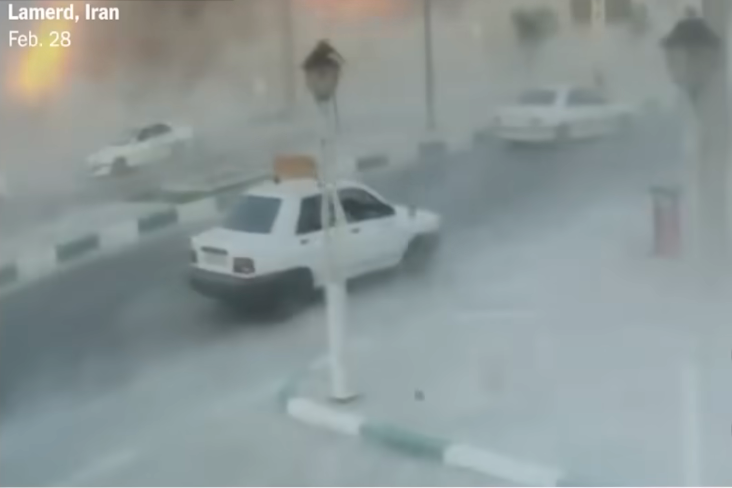
Following attacks on the Tehran University of Science and Technology, Iran’s Revolutionary Guard threatened to target American and Israeli university campuses in the Middle East (such as those in Dubai and Abu Dhabi). They have given a deadline of Tuesday, March 30, at 12:00 PM for the US to condemn the bombing of Iranian universities, or these campuses will be considered legitimate targets. The UAE reported intercepting 16 ballistic missiles and 42 drones on a single Sunday, totaling over 10,000 drones and 400 missiles since the conflict began.
Fact Check: General Bajwa
Reports circulating on Indian media and social media claiming that former Pakistani Army Chief General Bajwa is in critical condition or has died following a brain hemorrhage are fake news. General Bajwa is alive and well. He confirmed in a personal phone conversation that he is fine and was even heading out for a walk.
Iranian Missile Attacks on Israeli Chemical Plant / Factory Near Kiryat Shmona / Neot Hovav
- https://www.timesofisrael.com/liveblog_entry/officials-checking-possibility-of-hazardous-materials-leak-at-factory-hit-by-iranian-missile-public-told-to-stay-away/
- https://english.news.cn/20260329/55ccf27fbfc046588cb68ca1cc974d08/c.html (Xinhua on chemical complex blaze)
Iran Attacks on UAE (Dubai, Sharjah, Abu Dhabi) – Significant Portion of Strikes
- https://en.wikipedia.org/wiki/2026_Iranian_strikes_on_the_United_Arab_Emirates (overview with interception numbers)
- Related coverage: https://www.bbc.com/news/articles/crl4gxgkkylo
Iran’s Khondab (Khandab) Heavy Water Plant No Longer Operational (IAEA Confirmation)
- https://www.aljazeera.com/video/newsfeed/2026/3/30/iaea-says-irans-khondab-heavy-water-reactor-no-longer-operational
- https://www.arabnews.com/node/2638096/middle-east
Pakistan Stock Market Crash (~6000 points drop) + Oil Prices Rising (~$116)
- https://www.arabnews.com/node/2631073/pakistan (PSX drop due to tensions)
- Oil pressure context: https://tresmark.com/news/kse100-pressure-oil-116-pakistan-markets-inflation/
Trump on Regime Change, Kharg Island, 13,000 Targets Bombed
Fact Check: General Bajwa (Rumors of Death/Brain Hemorrhage – Confirmed Fake)
- https://sundayguardianlive.com/world/fact-check-is-qamar-javed-bajwa-dead-or-alive-check-former-pakistani-army-chief-latest-health-update-amid-brain-haemorrhage-claims-180232/ (debunks death claims; he is alive)
Other Elements (Partial/Related Coverage)
- Iran internet blackout: https://www.forbes.com/sites/daveywinder/2026/02/28/iran-plunges-into-near-total-internet-blackout-as-epic-fury-strikes-begin/
- Iran threatens US/Israeli universities in Middle East (deadline around March 30): https://www.lemonde.fr/en/international/article/2026/03/29/iran-s-revolutionary-guard-threatens-us-universities-in-the-middle-east_6751905_4.html
If you want to read more news: More News Read Here