
Frontline Reports: Isfahan and the Kuwaiti Incursion
Recent kinetic activity in the Middle East has entered a more volatile phase following targeted Israeli air strikes and retaliatory Iranian operations. Al Jazeera footage has provided clear evidence of the destruction at a market in Isfahan, where heavy bombardment levelled commercial structures and resulted in numerous civilian casualties. This operation signals Israel’s continued resolve to strike deep within Iranian territory despite the risk of regional contagion.
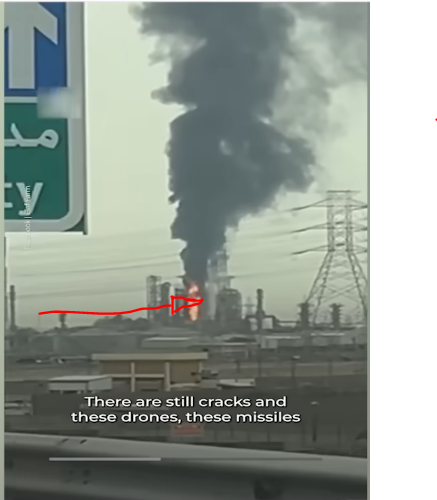
Parallel to these events, Iran has conducted its fifth strike against Kuwait International Airport. This follows an incursion ten days ago that successfully disabled the airport’s radar system. The persistence of these attacks highlights a significant gap in regional aerial security.
In response, the United States has initiated the installation of a $8 billion “lower-tier air and missile defence sensor” system. This high-value defensive asset is designed to rectify vulnerabilities in the existing screen, which has struggled to provide a comprehensive shield against Iranian theatre ballistic missiles.
Technological Asymmetry: The Cluster Missile Challenge to Iron Dome
A pivotal shift in Iranian strategy suggests that their military leadership believes they have “cracked the code” of the Iron Dome. Historically, Iran viewed single-missile launches as “wasted” efforts, given their high rate of interception. By pivoting to cluster munitions, they have sought to overwhelm the mathematical capacity of Israeli defences. The technical failure point occurs during the terminal phase:
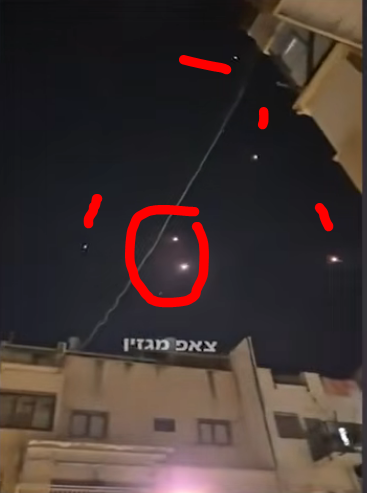
- Saturation Mechanism: Unlike standard projectiles, the Iranian cluster missile is engineered to fragmentise into 20–25 sub-munitions upon entering Israeli airspace.
- Interceptor Depletion: The Iron Dome typically assigns one or two interceptors per incoming target. When a single radar signature suddenly multiplies into two dozen distinct threats, the system cannot neutralise the volume, allowing 18 to 23 fragments to bypass the screen.
- Operational Consequences: Evidence from Tel Aviv and Jerusalem confirms that these munitions are reaching their targets. While sirens have become a permanent fixture of urban life, the human cost is rising; recent strikes on residential buildings resulted in 11 reported injuries, underscoring the shift from successful interception to containment failure.
The ‘Two Fronts’ and the Gas Field Catalyst
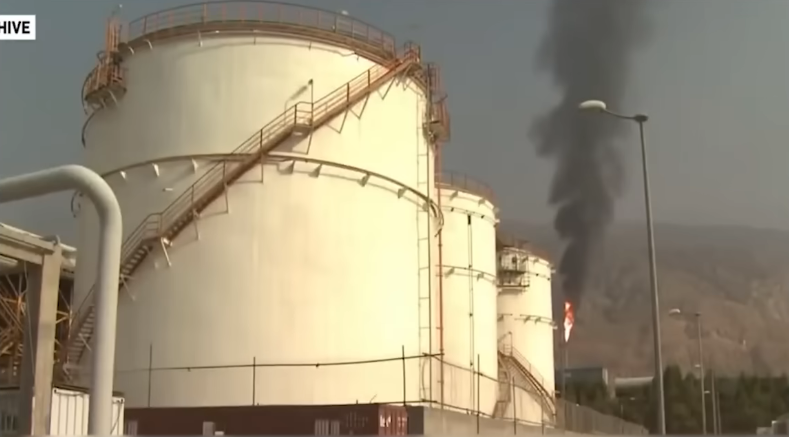
Senior analyst Christiane Amanpour has characterised the current landscape as a “two-front” war involving Lebanon and Iran. While Israel continues its campaign against Hezbollah, the primary catalyst for the current spike in escalation was the Israeli strike on the Paras gas field Iran’s most significant energy asset. This triggered a massive retaliatory wave from Tehran, which targeted Israeli gas infrastructure and areas surrounding undeclared nuclear sites.
The political subtext involves Donald Trump, whose public rhetoric on Truth Social appeared to caution Israel against striking energy plants to avoid a total regional collapse. However, emerging reports suggest that Trump possessed prior knowledge of the Israeli plan. This indicates the strikes were a calculated pressure tactic intended to force an Iranian retreat, though the gambit appears to have backfired, prompting Tehran to increase its use of kinetic force rather than de-escalate.
Regional Humiliation: The Political Fallout in India
The exclusion of India from the emerging diplomatic architecture has triggered a domestic political firestorm in New Delhi. Sanjay Singh of the Aam Aadmi Party has led the critique against Prime Minister Modi, asserting that the administration was “fooled” by its Western partners.
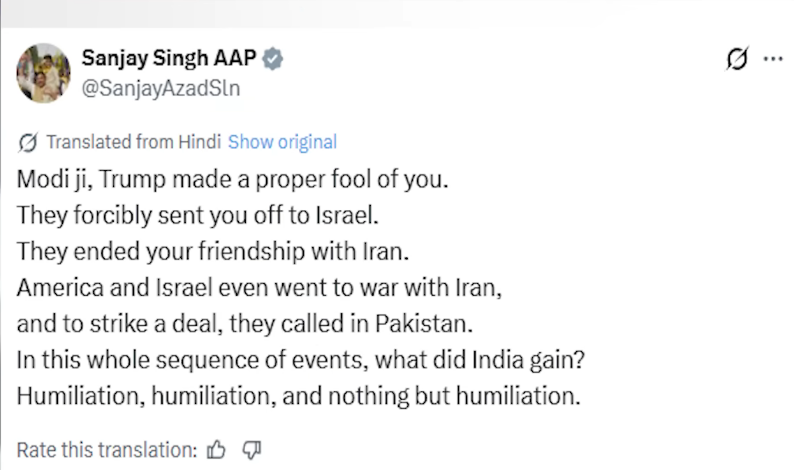
The opposition’s narrative suggests that by abandoning its traditional neutrality and “friendship” with Iran in favour of a strict pro-Israel alignment, India has been relegated to the periphery while its regional rival, Pakistan, has been elevated to a central mediating role.
This sense of humiliation is echoed by Rajiv Shukla, traditionally regarded as a “soft-minded” or moderate voice regarding Indo-Pakistani relations. Shukla’s uncharacteristic vitriol targeted at the fact that the United States, China, Russia, and Saudi Arabia have collectively designated Pakistan as a “messenger of peace” reflects a total collapse of Indian diplomatic patience. He specifically noted the sting of watching American television networks “singing the praises” of Pakistan’s Army Chief, a development he views as a profound strategic setback for India.
Diplomatic Deadlock: Iran’s Terms for Negotiation
The direct consequence of India’s perceived marginalisation is the emergence of a new tripartite mediation bloc consisting of Turkey, Egypt, and Pakistan. These nations are facilitating talks expected to commence within the next 48 hours. However, Tehran has established a rigid diplomatic protocol that reflects its deep distrust of the Trump inner circle.
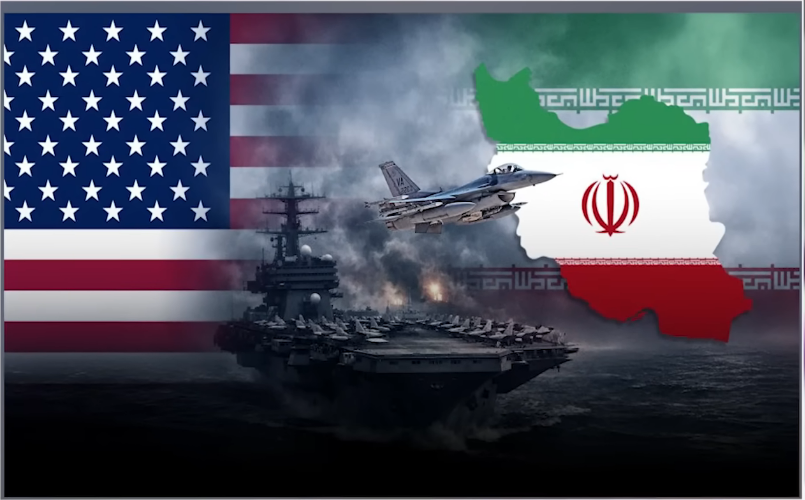
Iranian officials have explicitly rejected any communication with Steve Witkoff or Jared Kushner, characterising them as “British-style foreign agents” acting solely for Israeli interests. Instead, Iran insists on negotiating exclusively with Vice President JD Vance. This demand is rooted in what Tehran describes as “constitutional standing”; they view Vance as the only figure with the formal hierarchy and authority to provide binding guarantees, refusing to engage with “informal” or personal envoys of the President.
US Military Build-up: The 82nd Airborne Division
While the diplomatic track is active, the United States is simultaneously projecting power through the deployment of the 82nd Airborne Division. Scale estimates for this build-up vary significantly, with Reuters reporting a contingent of 3,000–4,000 troops, while CNN places the figure closer to 1,000. Known as the “Response Force,” this division maintains the capability to deploy anywhere on the globe within 18 hours.
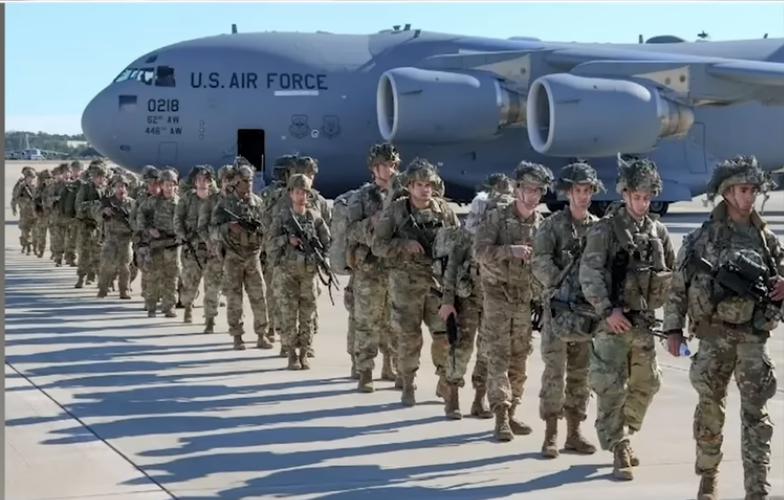
The historical weight of this unit notably its roles in the 1944 Normandy landings and the 2021 Kabul evacuation is being used as a psychological lever against Tehran. However, the political cost of this deployment is rising. Domestic US support for Iranian strikes has dipped from 37% to 35%, while opposition has climbed to 61%.
Furthermore, the human cost of the conflict is becoming clearer: CentCom has recorded 13 US deaths and 290 wounded. Of those injured, 10 remain in critical condition, though a “return-to-force” ratio of 255 personnel indicates a high level of operational resilience.
Economic Volatility: The $95 Oil Threshold
The global energy market remains the primary barometer for the crisis. After peaking at $110 per barrel, oil prices have receded to $95 following the tentative resumption of tanker traffic through the Strait of Hormuz. This cooling of the market is seen as a direct response to the mediation efforts led by Pakistan, Egypt, and Turkey.
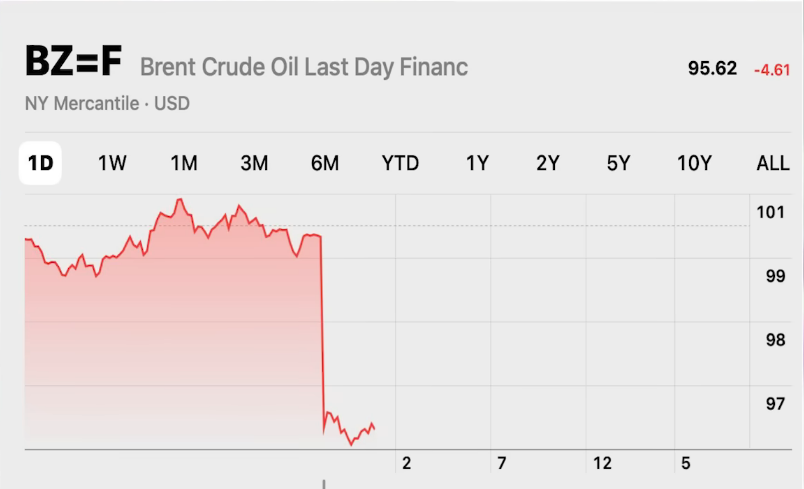
In Pakistan, the volatility of global Brent crude has translated into a specific domestic grievance regarding the cost of High Octane fuel. This has hit the middle-class segment particularly hard, especially those operating vehicles with 1.5 Turbo engines that require premium fuel for performance and longevity. There is a palpable public expectation that successful negotiations in the coming days could drive prices back toward the pre-war 75–80 range, providing much-needed relief to a strained domestic economy.
Al Jazeera: https://www.aljazeera.com/video/newsfeed/2026/3/25/drone-attack-ignites-fuel-tank-at-kuwait-airport
If you want to read more news: Read Here