In the past few hours, significant diplomatic and military developments have reshaped the geopolitical landscape of the Middle East, with Pakistan positioned at the forefront of mediation efforts between the United States and Iran,. Recent reports suggest a major breakthrough is on the horizon as high-level diplomatic correspondence intensifies between Islamabad, the Middle East, and Washington.
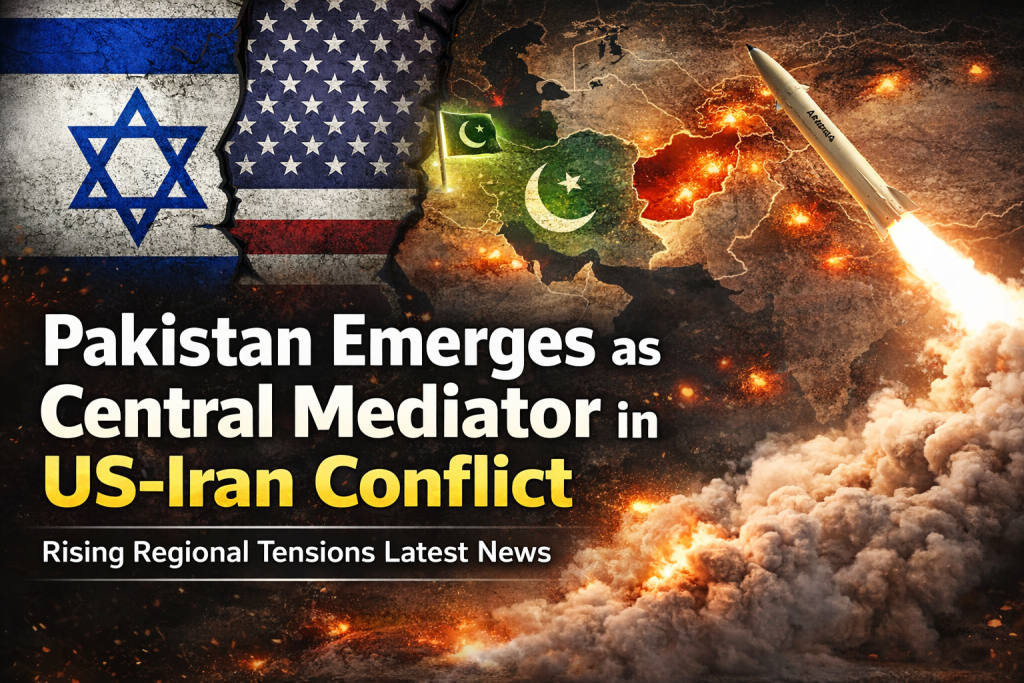
Prime Minister Shehbaz Sharif’s Diplomatic Initiative
A pivotal moment occurred when Prime Minister Shehbaz Sharif issued a statement welcoming and fully supporting ongoing efforts for dialogue to end the conflict in the Middle East. The Prime Minister emphasised that Pakistan is prepared and honoured to host meaningful and conclusive talks for a comprehensive settlement, provided both the United States and Iran concur.
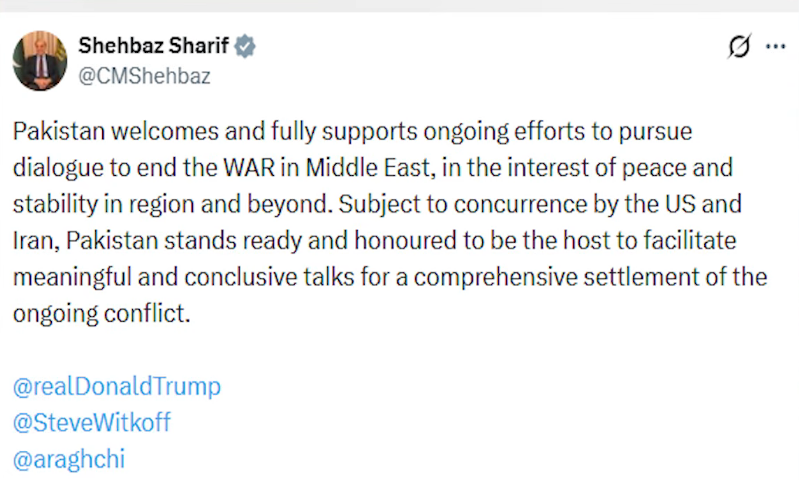
The significance of this gesture was amplified when the Prime Minister tagged key figures in his message: Donald Trump, his Special Envoy for the Middle East Steve Witkoff, and Iranian Foreign Minister Abbas Araghchi. Shortly after, Donald Trump quote-tweeted the Prime Minister’s statement, which is being interpreted by observers as a tacit endorsement of Pakistan’s mediatory role.
The Road to Islamabad: Why Pakistan? News
According to senior diplomatic sources, Pakistan’s involvement is not a sudden development but the result of approximately 11 to 12 days of behind-the-scenes diplomacy. While other regional players such as Qatar, Turkey, and Egypt were considered as potential venues for talks, various reservations existed:
- Qatar : Faced reservations from the Iranian side.
- Egypt : Encountered concerns due to its open diplomatic channels with Israel.
- Turkey : Met with reservations from one of the involved parties.
Consequently, Pakistan emerged as the neutral ground where both the Americans and Iranians felt comfortable pursuing a dialogue. Reports now suggest that Steve Witkoff may soon travel to Pakistan to lead in-person negotiations, with Islamabad facilitating direct or mediated communication between the two adversaries.
Military Developments and the Trump-Munir Dialogue
Complementing the diplomatic track, there are reports of direct high-level contact between the U.S. and the Pakistani military. It has been reported that Donald Trump held a telephonic conversation with Field Marshal Asim Munir to discuss the evolving regional scenario. This interaction underscores that the country’s establishment is fully on board with the mediation process. Furthermore, the Inter-Services Public Relations (ISPR) is scheduled to hold a briefing to update journalists on these critical regional developments and potential security operations,.
Escalation Amidst Peace Talks
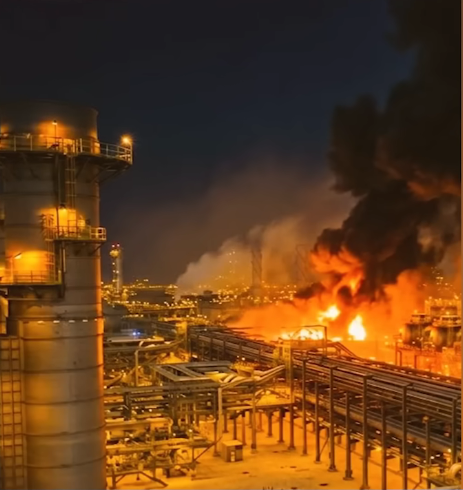
Despite the push for diplomacy, the situation on the ground remains volatile. Reports indicate continued strikes, with explosions heard in Tehran and retaliatory actions taken by Iran against Israeli interests. New footage suggests that missiles have been fired from Kuwait by U.S. forces targeting Iranian positions. Simultaneously, the Islamic Revolutionary Guard Corps (IRGC) has released footage of “Sejil” missiles capable of carrying 700kg warheads over 2000 kilometres and claimed successful strikes against U.S. radar systems in Bahrain,.
This conflict has also had unexpected civilian impacts. Users of the Pakistani financial app SadaPay reported service disruptions, which the company attributed to a drone strike on their infrastructure located in Bahrain,. While online transactions were affected, the company assured users that their funds remain secure and physical card payments continue to function.
The Terms of Engagement: Demands from Both Sides
For a formal ceasefire and resolution to be reached, both nations have reportedly placed specific conditions on the table:
- Iran’s Conditions : Compensation for damages incurred during the bombing of Iranian territory, the removal of U.S. military bases from the Gulf region, and a guarantee against future aggression.
- USA’s Conditions : The immediate reopening and protection of the Strait of Hormuz, the total termination of Iran’s nuclear program, and a cessation of strikes against Gulf nations.
While neither the White House nor the Iranian government has officially confirmed these terms, the refusal of U.S. officials to deny the ongoing talks suggests that a “back-channel” process is indeed active.
The Regional Impact and Criticism of India
Pakistan’s central role has drawn sharp reactions from across the border. Indian journalist Meenu Jain has publicly criticised the Modi administration for its perceived diplomatic failure.
She argued that while India has halted water supplies to Pakistan and suspended the Indus Waters Treaty, it has lost its standing to mediate in the Middle East. Jain noted that the international community waited for a global power to intervene, yet it is Pakistan a nation often disparaged in Indian political rhetoric that has been called upon by the U.S. leadership to facilitate peace,. She further criticised Prime Minister Modi for failing to maintain a balanced stance between Iran and Israel, leading to India’s exclusion from this critical peace process.
Conclusion
As the region stands at a crossroads, the upcoming 24 hours are expected to be decisive. With the Pakistani military preparing for a major briefing and high-level U.S. dignitaries potentially arriving in Islamabad, the world watches to see if Pakistan can successfully bridge the gap between Washington and Tehran to secure lasting regional stability.
NBC News: Pakistan moves to mediate, possible Islamabad meeting. https://www.nbcnews.com/world/asia/pakistan-moves-mediate-us-iran-trump-says-giving-five-days-rcna264843
Financial Times (via Indian Express/others): Asim Munir-Trump call and lead mediator pitch. https://indianexpress.com/article/world/asim-munir-speaks-to-trump-pakistan-bid-to-play-lead-mediator-on-iran-report-10597418/
Reuters: Pakistan’s dual ties and potential peacebroker role. https://www.reuters.com/world/asia-pacific/pakistan-leans-us-iran-ties-emerge-potential-peacebroker-2026-03-24/
Al Jazeera: Pakistan ready to host talks. https://www.aljazeera.com/news/2026/3/24/pakistan-ready-to-host-us-iran-talks-can-latest-peace-push-work
Dawn (Pakistan): Why Pakistan is central to US-Iran diplomacy. https://www.dawn.com/news/1984819
DW/Hindustan Times: Indian reactions and pressure on Modi. https://www.dw.com/en/india-pakistans-mediator-role-in-iran-war-puts-modi-under-pressure/a-76506689
If you want to read more news: Read Here