Upcoming Drone Footage and China’s Response
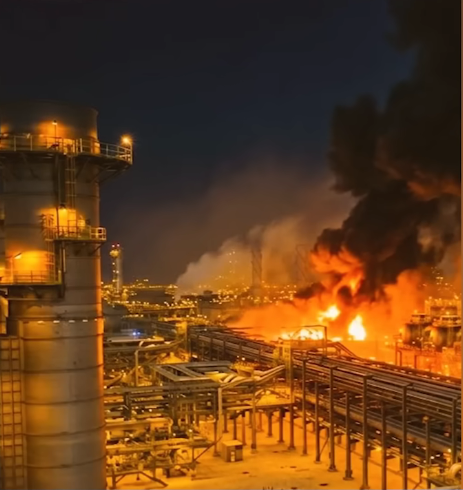
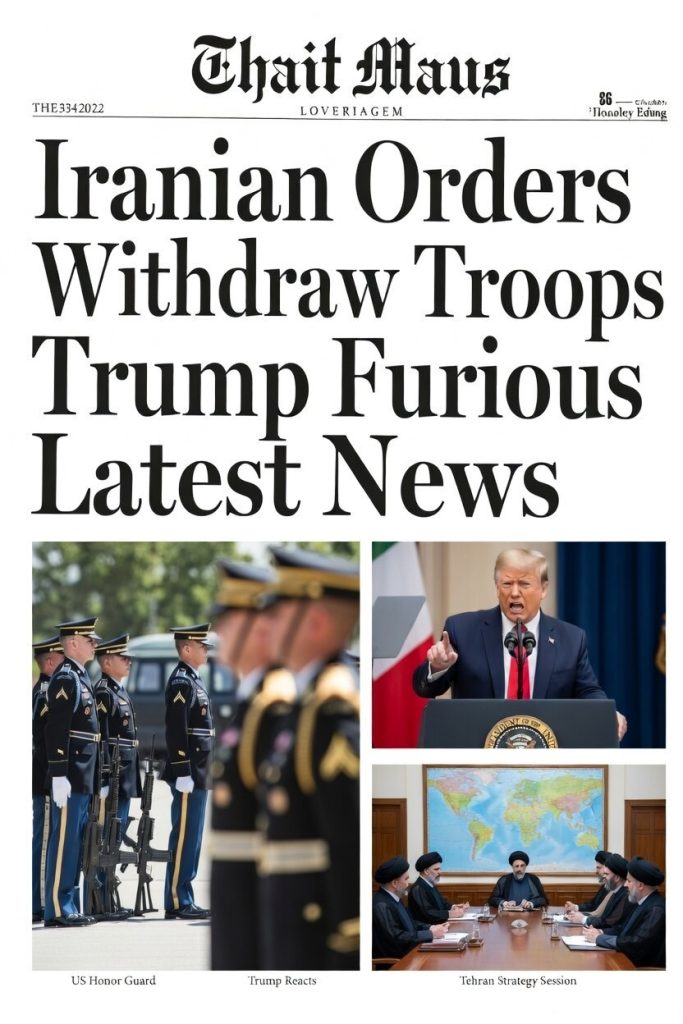
Let’s move towards the news. I will also show you some videos. I will show those to you later. In fact, I will share with you footage of a very dangerous kind of drone. After a short while, I have to share drone footage with you. Along with that, China has shown a thumb to America. This is also a very interesting detail. I will share this with you shortly.
First Time Reuters Report on Islamabad Negotiations
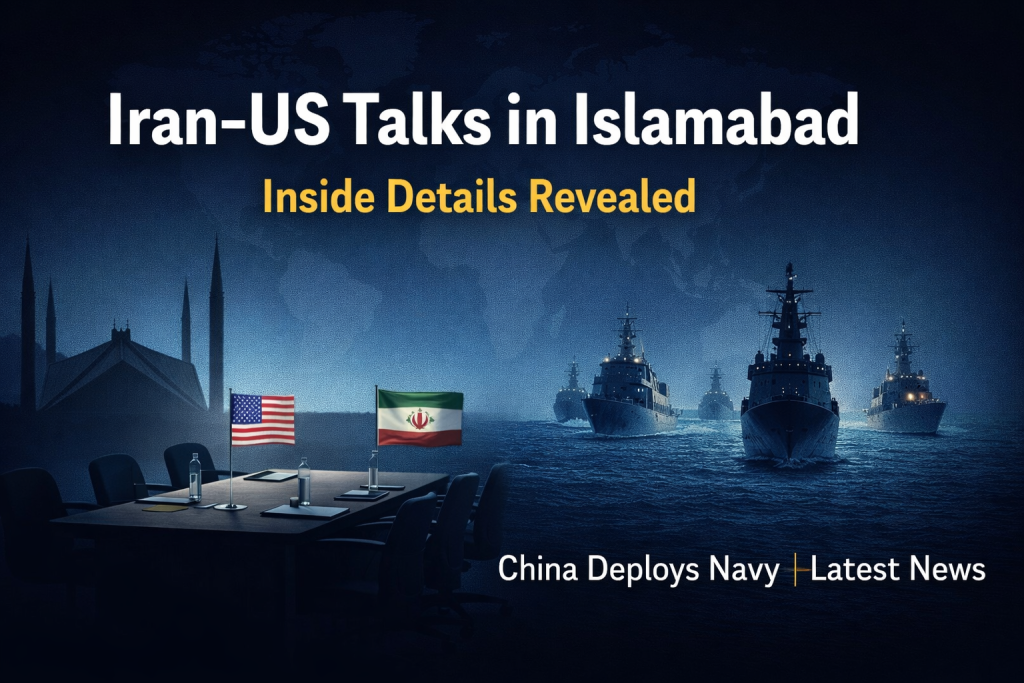
But first of all, Reuters has given a very interesting news. And for the first time, it seems they have properly reported what actually happened inside the negotiations between Iran and America in Islamabad. Obviously, Pakistani journalists were restricted only to the convention center. There was a big debate here from a strategy point of view that Pakistani journalists could not report and they did not know anything. I would like to talk about a few things on this.
First of all, as a journalist, we should know that the other side always tries to hide the news. It is the skill of a journalist that you avoid that and reach the news. Because obviously, the other side will fully try to hide it. Here, obviously, the entire arrangement of the convention center was made.
But the news given by Reuters says: “Exclusive: US, Iran leave door open to dialogue after tense Islamabad talks
But the news given by Reuters says: “Exclusive: US, Iran leave door open to dialogue after tense Islamabad talks.” If you remember, when this happened for the first time and J.D. Vance gave a speech, I had said exactly the same thing that I feel the door is still open. The choice of words and the construction of sentences by J.D. Vance indicated that the door is still open.
The news says that Iranian and American officials ended their highest-level talks in decades without any major progress. According to 11 sources familiar with the talks, discussions are still ongoing. Now this news has been combined from 11 different sources, so its authenticity can be believed.
“Door Still Open” – Interpretation of Early Signals
It says that the negotiations took place in Islamabad’s luxury Serena Hotel in three sections: one for the American delegation, one for the Iranian delegation, and one central area where shuttle meetings took place in the presence of Pakistani mediators. According to sources, mobile phones were not allowed in the central room, due to which delegations, including U.S. Vice President J.D. Vance and Iranian Parliament Speaker Mohammad Baqir Qalibaf, had to go outside to contact their countries.
A Pakistani government source said that at one point during the talks, strong hope emerged that progress would be made and both sides would reach an agreement. But the situation changed very quickly. According to another source, both sides had come very close to an agreement and about 80% of the matter had been settled, but there were some decisions on which agreement could not be reached.
Talks End Without Breakthrough but Continue
Two senior Iranian sources described the atmosphere as heavy and unfriendly and said that despite Pakistan’s efforts, neither side was ready to reduce tensions. However, according to the same Iranian sources, by Sunday morning there was some improvement in the atmosphere and the possibility of a one-day extension emerged, but differences remained.
Core Disagreement: Nuclear Program and Trust Issues
A Western source said that the Iranian side failed to understand that America’s basic objective is to make an agreement that ensures Iran can never acquire nuclear weapons. On the other hand, Iran had a lack of trust in America’s intentions. A U.S. official said that contacts between the two countries are ongoing and progress toward an agreement is being made.
According to a diplomat based in the Middle East, even after J.D. Vance left Islamabad, contacts between mediators and American officials continued, while another source said that Pakistan is still delivering messages between Tehran and Washington.
Repeated Attempts at Initial Framework
According to four of the 11 sources, the talks several times appeared to reach an initial framework, but due to differences over Iran’s nuclear program and financial matters, progress could not be made. According to sources, most of the important discussions in Islamabad took place between J.D. Vance, Mohammad Baqir Qalibaf, and Iranian Foreign Minister Abbas Araghchi.
A security source said that there were ups and downs in the talks. There were tense moments. People left the room and came back. Pakistani representatives, including Army Chief Asim Munir and Foreign Minister Ishaq Dar, remained in contact between both sides throughout the night so that the talks could continue.
Sharp Exchange Over Trust and Past Attacks
According to sources, when discussions were held on guarantees and the lifting of sanctions, Qalibaf’s tone became strict. He said, “How can we trust you when in the previous negotiations you said that America would not attack during diplomacy, and that attack started just two days after the negotiations?”
At one point, tensions increased so much that loud voices were heard outside the room, after which Asim Munir and Ishaq Dar arranged tea and separated both sides. In the final stages of the talks, which continued until Sunday morning, the American side kept moving between its room and the private area.
So these are all the details of those negotiations that Reuters has shared for the first time.
China has strongly opposed the naval blockade
China has strongly opposed the naval blockade. Chinese Admiral Dong Jun warned the US that China has trade and energy agreements with Iran that must be respected. He stated that the Strait of Hormuz is controlled by Iran and must remain open. He added that the start of talks in Islamabad is a positive step. The UK, Australia, Turkey, and Japan have also expressed opposition to the blockade or urged a diplomatic solution.
Naval Blockade and Military Updates The US military
Naval Blockade and Military Updates The US military has begun the blockade with over 15 warships. The USS George H.W. Bush is taking a long route around Africa to avoid Houthi-controlled waters in the Red Sea. Trump claimed that 158 Iranian warships have been sunk and warned that any ship attempting to break the blockade would be treated like a drug-smuggling vessel.
Italian PM Giorgia Meloni and Iranian President Masoud Pezeshkian.
Trump’s Controversies Trump faced backlash for calling Pope Leo “weak and dangerous” regarding foreign policy. He also shared and later deleted an AI-generated image of himself as Jesus Christ, later claiming it was actually a “doctor” persona. These remarks were condemned by Italian PM Giorgia Meloni and Iranian President Masoud Pezeshkian.
Reuters Exclusive on Tense Islamabad Talks (“Door Still Open”, Serena Hotel Details, 11 Sources, JD Vance & Qalibaf)
- Main Reuters Report: https://www.reuters.com/world/asia-pacific/us-iran-leave-door-open-dialogue-after-tense-islamabad-talks-2026-04-13/
- Follow-up on possible return to talks: https://www.reuters.com/world/asia-pacific/us-iranian-teams-could-return-islamabad-peace-talks-this-week-four-sources-say-2026-04-14/
China’s Strong Opposition to US Naval Blockade (Admiral Dong Jun Warning)
- https://www.reuters.com/world/china/china-urges-restraint-over-us-blockade-strait-hormuz-backs-talks-2026-04-13/
- https://www.news18.com/world/dont-interfere-in-our-affairs-china-warns-us-over-hormuz-blockade-ws-l-10031466.html
Trump’s Controversies (Pope Leo “Weak”, AI Jesus Image Deleted, Reactions from Meloni & Pezeshkian)
- https://www.theguardian.com/world/2026/apr/13/donald-trump-pope-leo
- https://www.nytimes.com/live/2026/04/13/us/trump-news
If you want to read more news: More News Read Here